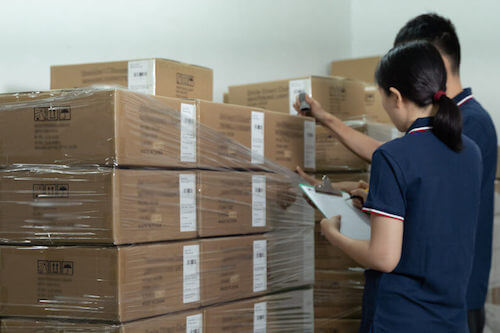
Die Warenausgangskontrolle spielt eine entscheidende Rolle, um sicherzustellen, dass Produkte die geforderte Qualität erfüllen, bevor sie das Werk verlassen. Diese Kontrolle erfolgt nach Abschluss der Produktion, wenn die Waren verpackt sind oder kurz vor der Verpackung stehen. In dieser Phase werden Menge, Verarbeitung, Verpackung, Etikettierung und der allgemeine Produktzustand anhand der vereinbarten Spezifikationen überprüft. Durch die Warenprüfung vor dem Versand können viele häufige Probleme frühzeitig erkannt und behoben werden. So lassen sich Streitigkeiten, Verzögerungen oder Reklamationen nach Ankunft der Produkte am Bestimmungsort vermeiden.
Einer der Hauptgründe für die Wichtigkeit der Warenausgangskontrolle ist die Risikominimierung. Sobald die Waren versendet sind, wird die Behebung von Problemen schwierig und kostspielig. Probleme wie falsche Mengen, sichtbare Mängel, mangelhafte Verpackung oder nicht konforme Etikettierung können zu finanziellen Verlusten, beschädigten Geschäftsbeziehungen oder sogar Importstopps führen. Eine strukturierte Prüfung auf Basis anerkannter Stichprobenverfahren ermöglicht die objektive Erkennung von Problemen, anstatt sich auf Annahmen oder Kontrollen in letzter Minute zu verlassen. Dies verschafft Käufern und Lieferanten ein klares Bild der Produktqualität in der letzten Produktionsphase.
Pre-shipment inspection also helps confirm consistency across a batch. Even when production runs smoothly, variations can appear between units, especially in large orders. Inspecting finished goods helps verify that quality is uniform and that the shipment reflects what was agreed in terms of materials, workmanship, and presentation. This is especially important for international trade, where buyers may not be present during production and rely on inspection results to make shipment decisions.
Another important aspect is compliance. Exported goods often need to meet specific requirements related to packaging, labeling, or documentation. A final inspection helps ensure that these elements are in place before shipment, reducing the risk of customs issues or regulatory problems. By addressing these checks before goods leave the factory, companies can ship with more confidence and fewer surprises.
In short, pre-shipment inspection acts as a final control point between production and delivery. It provides clear information about product quality, reduces uncertainty, and supports better decision-making before goods are exported. For companies involved in international manufacturing and trade, this step is not just a formality, but a practical way to protect quality, time, and costs.