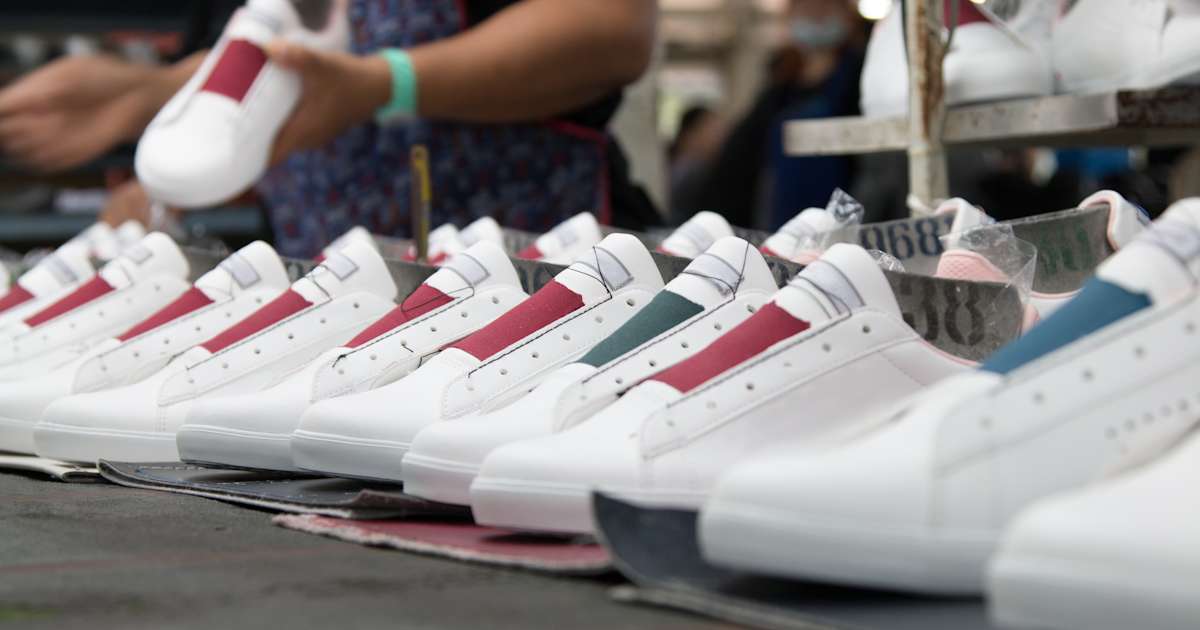
Footwear manufacturing involves multiple materials, production stages, and manual operations, which makes it particularly sensitive to quality issues if processes are not closely controlled. Even when designs are approved and materials are sourced correctly, problems can still emerge during production that affect appearance, comfort, durability, and overall performance. Understanding the most common quality issues helps manufacturers and buyers focus their controls where they matter most.
One frequent issue in footwear production is inconsistent stitching. Uneven stitch length, loose threads, skipped stitches, or poor seam alignment can weaken the structure of the shoe and negatively impact its appearance. These problems often occur due to incorrect machine settings, worn needles, or insufficient operator training, and they tend to repeat across multiple pairs if not detected early.
Bonding and adhesion defects are another major concern. Poor glue application, incorrect drying times, or unsuitable adhesives can cause soles to detach or components to separate during use. These defects may not always be immediately visible at the factory, but they often lead to early failures once the footwear is worn, resulting in customer complaints and returns.
Material defects also contribute significantly to quality problems. Variations in leather thickness, surface blemishes, inconsistent colors, or defects in synthetic materials can affect both aesthetics and performance. If incoming materials are not properly inspected, these issues can pass unnoticed into production and create visible inconsistencies across the finished batch.
Sizing and fit inconsistencies are particularly damaging in footwear manufacturing. Slight deviations in last dimensions, cutting accuracy, or assembly alignment can result in shoes that feel different from pair to pair, even within the same size. These issues are difficult to correct after assembly and often become evident only when products reach end users.
Another common issue involves finishing and appearance. Scratches, stains, excess glue marks, uneven edges, or poor surface treatment can reduce perceived quality, especially for mid- to high-end footwear. These defects are often considered minor individually, but when they appear repeatedly across samples, they can cause inspection failures and damage brand perception.
Packaging-related problems are also frequently found. Incorrect pairing, mismatched sizes in boxes, insufficient protection, or wrong labeling can occur when packaging is rushed or not properly controlled. Even when the product itself is acceptable, packaging errors can lead to logistical complications and rejection at inspection.
Finally, lack of consistency across production batches remains a recurring challenge. Differences between early and later production runs may arise due to material substitutions, process adjustments, or changes in workforce. Without effective in-process quality control, these variations can accumulate and result in uneven quality across the shipment.
Addressing common quality issues in footwear manufacturing requires attention at every stage, from material intake to final packing. Identifying these problems early and understanding their root causes helps reduce rework, improve consistency, and deliver footwear that meets both functional and market expectations.